BLUE TEGU GUIDE · TRAVEL WEBSITE STRATEGY
Travel Website Strategy: How to Turn Inspiration Into Action
A successful travel website has to do more than look beautiful. It needs to help someone move from dreaming about a trip to understanding it, trusting the business behind it, and knowing what to do next.
This guide explains how to structure travel websites around the actual traveler journey — from discovery and destination research through planning, comparison, booking, and inquiry.
A TRAVEL WEBSITE SHOULD HELP SOMEONE
Could this trip be for me?
What is actually here?
How would this trip work?
Do I believe this business?
Book, inquire, subscribe, or continue planning.
TRAVEL WEBSITE STRATEGY
The Website Is Part of the Travel Decision.
Travel websites sit in an unusual position. They are part inspiration, part research tool, part sales system, and part reassurance.
Someone may arrive because they saw a destination on social media, searched for a town they have never visited, clicked through from Google, heard about a tour from a friend, or simply began wondering whether Portugal should be their next trip.
Those visitors do not all need the same thing.
Some need inspiration. Others need transportation information. Some want to compare experiences. Others are already looking for availability or a way to ask a question.
A strong travel website strategy creates a structure that helps all of those people move forward without forcing them into the same generic funnel.
Do Not Build Pages in Isolation. Build a Traveler Journey.
Every major page should help answer a question, reduce uncertainty, establish trust, or make the next useful step easier.
WHAT IS TRAVEL WEBSITE STRATEGY?
Strategy Comes Before Layouts, Colors, and Plugins.
Travel website strategy is the process of deciding what the website needs to help travelers understand, what actions the business needs visitors to take, and how the site should connect those two things.
Design still matters. Beautiful travel photography, typography, spacing, visual hierarchy, and brand personality all influence how someone experiences a website.
But appearance cannot compensate for a confusing structure.
A visually impressive website that hides important information, buries destinations, makes booking difficult, or provides no obvious path between inspiration and action is still a weak travel website.
Audience
Who are you trying to help, and what kind of trip are they considering?
Questions
What does someone need to know before they feel comfortable moving forward?
Structure
How should destinations, services, experiences, and planning content connect?
Action
What is the most useful next step at each stage of the journey?
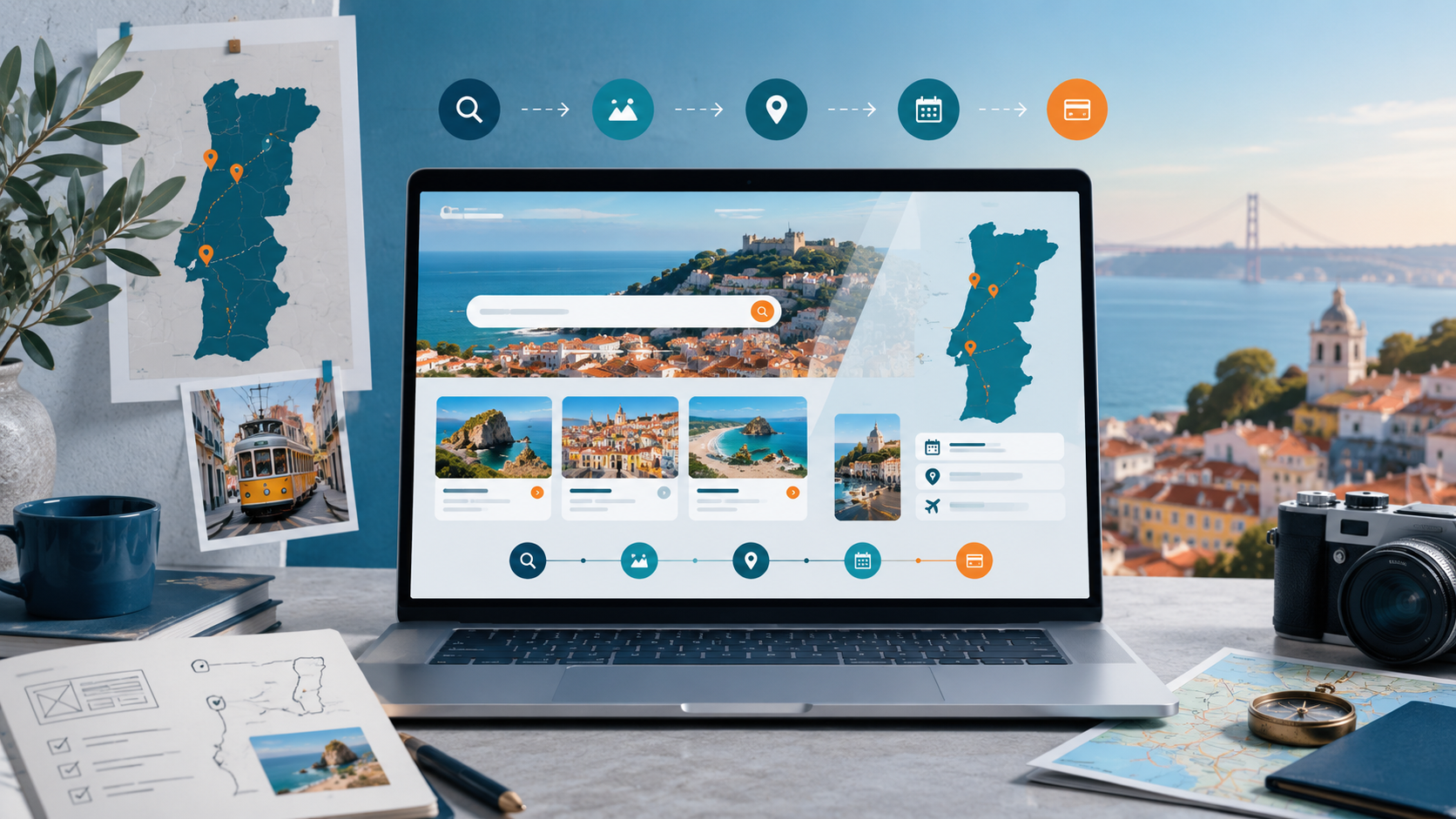
THE TRAVELER DECISION JOURNEY
Most Travelers Do Not Arrive Ready to Book.
Travel decisions develop over time. A website becomes more useful when it supports the different questions that appear along the way.
Could This Be My Trip?
The traveler is imagining possibilities. Destinations, experiences, photography, stories, and high-level guides matter most here.
Useful pages:- Destination overviews
- Inspirational guides
- Regional landing pages
- Experience collections
What Is Actually There?
Visitors begin comparing towns, activities, neighborhoods, hotels, routes, or different ways to spend their time.
Useful pages:- Things to do
- Where to stay
- Destination guides
- Experience pages
How Will This Work?
Transportation, timing, seasonality, opening hours, accessibility, cost, and itinerary questions become more important.
Useful pages:- Itineraries
- Transportation guides
- FAQs
- Practical planning content
Who Should I Choose?
Travelers compare businesses, tour formats, accommodations, reviews, policies, pricing, and differences between similar options.
Useful pages:- Tour pages
- Accommodation pages
- Comparison information
- Reviews and trust signals
What Do I Do Next?
The traveler needs an obvious path toward booking, inquiry, availability, contacting the business, or continuing their planning.
Useful actions:- Book now
- Check availability
- Ask a question
- Build an itinerary
TRAVEL HOMEPAGE STRATEGY
Your Homepage Should Explain Where the Visitor Can Go Next.
A travel homepage does not need to explain every destination, tour, room, itinerary, and service. Its job is to orient the visitor.
Within a short amount of time, someone should be able to understand what kind of travel business they have reached, where it operates, what makes the experience relevant, and where to continue.
Clear Positioning
Say what you offer and who it is for without making the visitor decipher abstract branding.
Destination Paths
Give travelers obvious ways to explore the places or regions most relevant to the business.
Experience Paths
Let visitors browse tours, stays, activities, or travel styles without first knowing the exact product name.
Trust
Introduce the people, expertise, reviews, local knowledge, or real-world experience behind the website.
Planning Help
Surface useful guides, itineraries, or practical information instead of making every homepage element transactional.
A Clear Next Step
Give the visitor a logical action: explore, plan, compare, inquire, or book.
DESTINATION ARCHITECTURE
Give Important Destinations a Real Home on the Website.
Destination pages can become some of the most useful pages on a travel website because they connect inspiration, practical information, experiences, and commercial opportunities.
Instead of scattering information about one destination across unrelated blog posts, create a clear destination hub that helps someone understand the place and continue deeper into the site.
Douro Valley
One useful landing page that introduces the destination and connects the most important planning and commercial content.
Destination Architecture and Travel SEO Should Support Each Other
Search strategy helps identify the questions travelers ask. Website strategy decides where those answers belong and how they connect.
Read the Travel SEO Guide →TOUR & COMMERCIAL PAGES
Make the Experience Easy to Understand Before You Sell It.
A strong commercial page reduces uncertainty before asking the visitor to make a commitment.
The Experience
What actually happens, and what makes it worth someone’s time?
Duration
How long does it take, and where does it fit in the travel day?
Location
Where does it begin, where does it end, and how does someone arrive?
Inclusions
What is included, excluded, provided, or expected from the guest?
Who It Is For
Make pace, accessibility, group style, and expectations clear.
The Next Step
Booking, inquiry, availability, or contact should be unmistakable.
TRUST & REASSURANCE
Travel Purchases Require More Than a Pretty Website.
Travel involves time, money, logistics, and often a place the customer has never visited before.
The website has to reduce some of that uncertainty.
Trust does not come from one badge or testimonial section. It accumulates through accurate information, clear policies, real photography, useful explanations, visible people, and a website that behaves predictably.
Show the actual place, product, team, room, route, or experience.
Cancellation, weather, changes, deposits, and expectations should be findable.
Social proof matters most when it feels connected to the actual experience.
Let visitors understand who operates the business and why they know the destination.
Outdated logistics can undermine trust faster than imperfect design.
When someone has a question, make it obvious how to reach a human.
MOBILE & ON-TRIP USE
The Website May Be Used While Someone Is Already Traveling.
Travel websites are not only research tools used from a laptop months before departure.
Someone may open the site while standing at a train station, walking through an unfamiliar neighborhood, deciding what to do that afternoon, or trying to find the meeting point for a tour.
Mobile design therefore needs to prioritize practical use, not simply make the desktop design smaller.
No pinching and zooming.
Meeting points and locations should be easy to find.
Calls, booking, maps, and contact buttons should work naturally.
Do not bury important travel information behind endless menus.
Travelers may be using mobile data or weaker connections.
CONVERSION PATHS
Not Every Useful Conversion Is a Booking.
The best next action depends on where the traveler is in the decision process.
Keep Exploring
Send inspiration-stage visitors toward destinations, itineraries, related experiences, or useful planning guides.
Build Confidence
Offer FAQs, comparisons, detailed experience pages, reviews, sample routes, and practical information.
Make Action Easy
Booking, checking availability, contacting the business, or requesting a quote should require as little friction as practical.
Match the Call to Action to the Visitor’s Level of Commitment
Asking every visitor to “Book Now” ignores the reality that many people still need information before they are ready to make that decision.
CONTENT & SEARCH
Content Should Strengthen the Website Architecture.
Travel content works best when it fills real gaps in the traveler journey rather than existing only because the website “needs a blog.”
Destination guides, transportation articles, itineraries, comparison pages, practical planning resources, and experience content can all support the larger structure of the site.
Each piece should have a reason to exist and a logical place to send the reader next.
BOOKING & WEBSITE TECHNOLOGY
Technology Should Support the Traveler Journey, Not Interrupt It.
Booking systems, CRM tools, forms, email workflows, analytics, maps, calendars, and automation can make the website more useful when they are connected intentionally.
Booking
Availability and reservation tools should feel like part of the website rather than an abrupt dead end.
Inquiry Forms
Ask for enough information to help without turning the form into an interrogation.
CRM Connections
Useful inquiry information should reach the systems where the business actually manages customers.
Follow-Up
Automate repetitive confirmations or routing while keeping important conversations human.
Analytics
Track important journeys and actions instead of measuring page views in isolation.
Maintenance
Every integration creates something that needs to remain functional over time.
The Website Can Do More Than Display Information
Thoughtful automation can connect website forms, inquiries, internal systems, follow-up, and customer communication without trying to automate every human interaction.
Explore Website Automation →COMMON TRAVEL WEBSITE MISTAKES
A Beautiful Website Can Still Make Travel Planning Harder.
Designing Around the Organization
Internal departments and product categories do not always match how travelers think about a trip.
Hiding Practical Information
Visitors should not have to search several pages to learn duration, location, timing, or basic logistics.
Using Generic Destination Copy
Empty adjectives do little to help someone understand what the destination or experience is actually like.
Making Every CTA “Book Now”
Many visitors need additional planning information before they are ready to buy.
Forgetting Mobile Travelers
On-trip visitors may need maps, phone numbers, meeting points, or opening information immediately.
Letting the Blog Become a Dead End
Useful travel content should connect back into destinations, experiences, and planning pathways.
Adding Technology Without a Purpose
More plugins, widgets, popups, chat systems, and scripts do not automatically create a better customer journey.
Ignoring What Happens After Launch
Travel information changes, links break, offers evolve, and systems require maintenance.
A SIMPLE 90-DAY WEBSITE FRAMEWORK
Improve the Journey Before You Rebuild Everything.
Many travel websites can improve significantly by understanding what already exists before committing to a complete redesign.
Understand
- Review current navigation
- Identify important destinations
- Audit tour and commercial pages
- Review mobile experience
- Identify common customer questions
- Review analytics and search data
- Map existing conversion paths
Restructure
- Simplify navigation
- Strengthen destination hubs
- Improve commercial pages
- Clarify calls to action
- Fix internal linking
- Improve trust information
- Address major mobile problems
Expand
- Build missing planning content
- Improve booking connections
- Add useful automation
- Strengthen search architecture
- Improve measurement
- Test important journeys
- Create an ongoing maintenance plan
PUTTING IT ALL TOGETHER
A Travel Website Should Help People Make Better Travel Decisions.
The strongest travel websites do not force inspiration, information, trust, and conversion into separate silos.
They connect destinations to planning information, planning information to experiences, experiences to trust, and trust to a clear next step.
That is what turns a website from a digital brochure into a useful part of the travel business.